
Acrylic boxes have become a popular choice for storage, retail display, home organization, and product packaging due to their clarity, strength, and modern appearance. Whether used to showcase collectibles, store cosmetics, or present merchandise in a retail environment, these boxes offer both functionality and aesthetic appeal. But what exactly are acrylic boxes made of, and why are they preferred over glass, plastic, and other storage materials? This article provides a clear explanation and highlights the key properties that make acrylic boxes so widely used.
Acrylic Boxes Are Made of Polymethyl Methacrylate (PMMA)
Acrylic boxes are primarily made from Polymethyl Methacrylate, commonly abbreviated as PMMA. PMMA is a type of transparent thermoplastic that is lightweight, durable, and resistant to shattering. It is also known under several trade names, including:
-
Acrylic
-
Plexiglass
-
Lucite
-
Perspex
Manufacturers produce acrylic sheets through extrusion or casting. These sheets are then cut, molded, or heat-formed into the desired shapes to create acrylic boxes in various sizes and thicknesses.
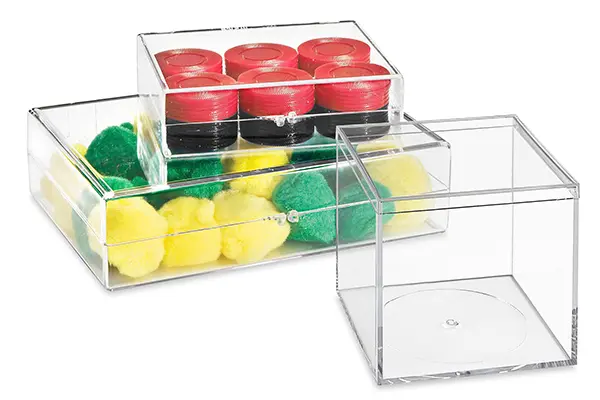
Why PMMA Is Used for Acrylic Boxes
PMMA is specifically chosen for acrylic boxes for several reasons:
1. High Transparency
Acrylic provides exceptional optical clarity, transmitting up to 92% of visible light—higher than regular glass. This makes acrylic boxes ideal for display purposes, as they showcase items without distortion.
2. Impact Resistance
Compared to glass, acrylic is significantly more impact-resistant. It does not shatter into sharp pieces, reducing safety risks and improving durability in high-traffic environments such as retail stores.
3. Lightweight Material
Acrylic is much lighter than glass, making acrylic boxes easier to transport, mount, and reposition. This is particularly important for large display boxes or storage containers.
4. Weather and UV Resistance
PMMA resists yellowing and degradation when exposed to sunlight. This long-term UV stability makes acrylic boxes suitable for both indoor and outdoor use.
5. Easy to Fabricate
Acrylic can be laser-cut, CNC-machined, bonded, heat-bent, and polished with precision. This flexibility allows manufacturers to create customized acrylic boxes with complex shapes, lids, hinges, or compartments.
How Acrylic Boxes Are Manufactured
The production process involves several key steps:
1. Material Cutting
Large acrylic sheets are cut into specific dimensions using laser cutters or saws. Laser cutting ensures smooth, polished edges.
2. Heating and Forming
For curved or shaped boxes, acrylic is heated until pliable and then formed using molds.
3. Bonding and Assembly
The individual panels are bonded together using acrylic cement or solvent adhesives. These adhesives chemically fuse the surfaces, creating strong, seamless joints.
4. Polishing and Finishing
Finally, the edges may be flame-polished or machine-polished to achieve a crystal-clear finish.
The result is a box with excellent clarity and strength, suitable for display, storage, and packaging.
Additional Materials Used in Acrylic Boxes
While the main material is PMMA, some acrylic boxes may incorporate other components, including:
-
ABS or metal hinges for lids
-
Rubber or silicone feet for stability
-
Plastic or metal handles for portability
-
Foam or velvet inserts for luxury display applications
However, these additions support functionality; the box itself remains predominantly acrylic.
Common Uses of Acrylic Boxes
Acrylic boxes are versatile and widely used in:
-
Retail display of jewelry, electronics, and accessories
-
Home organization for cosmetics, pantry items, and collectibles
-
Museum and gallery showcases
-
Food storage in commercial settings
-
Corporate gift packaging
-
Office and classroom organization
Their combination of transparency, durability, and style makes them suitable for numerous applications.
Conclusion
Acrylic boxes are made primarily from PMMA (Polymethyl Methacrylate), a clear and highly durable thermoplastic known for its excellent light transmission, impact resistance, and versatility. These properties make acrylic boxes a preferred choice for display, storage, and organizational purposes in both residential and commercial settings. Whether used to protect valuable items, organize everyday essentials, or enhance product presentation, acrylic boxes offer a practical and visually appealing solution.
Post time: 12-12-2025