
When purchasing seating for homes, workshops, or outdoor spaces, many buyers ask: how many kilograms can a sturdy plastic stool support? The answer depends on the stool’s design, material quality, manufacturing process, and structural reinforcement. On average, a sturdy plastic stool can typically support 100 to 200 kilograms (220 to 440 pounds), though heavy-duty models may handle even more.
Understanding load capacity is essential for safety, durability, and long-term performance.
Average Weight Capacity of Plastic Stools
Most standard household plastic stools are designed to support between 100 kg and 150 kg. These models are suitable for everyday indoor use, such as seating in kitchens, bathrooms, or bedrooms.
Heavy-duty or commercial-grade plastic stools, especially those made with reinforced polypropylene or industrial plastic blends, may support 180 kg to 200 kg or more. Manufacturers often conduct static load tests to verify these limits under controlled conditions.
However, it is important to distinguish between static load capacity (weight applied without movement) and dynamic load capacity (weight with movement or shifting). Dynamic loads place greater stress on the structure.
Factors That Affect Weight Capacity
Several factors determine how many kilograms a sturdy plastic stool can support:
1. Material Quality
High-density polypropylene (PP) and reinforced plastic materials provide better strength and impact resistance. Inferior or recycled plastic blends may reduce load-bearing capacity.
2. Structural Design
Stools with thicker legs, cross-bracing, ribbed undersides, and reinforced corners distribute weight more effectively. Hollow or thin-walled designs may weaken under pressure.
3. Manufacturing Process
Injection-moulded stools with uniform wall thickness generally offer better structural integrity. Poor molding techniques can create weak points or air pockets.
4. Leg Configuration
Four-legged stools with anti-slip pads provide better stability. Wider bases reduce tipping risk and improve weight distribution.
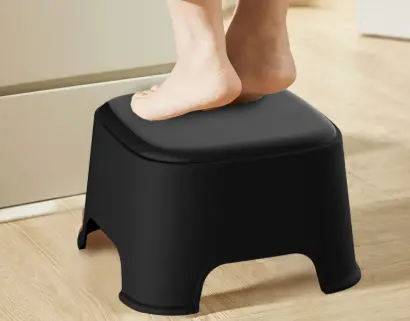
Indoor vs. Outdoor Plastic Stools
Outdoor plastic stools must also resist environmental stress such as UV exposure, temperature fluctuations, and moisture. UV-stabilized materials help prevent brittleness over time. While outdoor stools may have similar weight capacities, environmental degradation can affect long-term performance.
Safety Considerations
Even if a plastic stool is rated for 150 kg or more, improper use can lead to failure. For example:
-
Standing on a stool designed only for sitting
-
Placing it on uneven surfaces
-
Using it on slippery floors without anti-slip feet
-
Applying sudden impact loads
To maximise safety, always check manufacturer specifications and avoid exceeding the stated load limit.
Heavy-Duty Plastic Stools for Commercial Use
In commercial settings such as schools, factories, or event venues, heavy-duty plastic stools are preferred. These models often feature reinforced ribs and thicker seat panels. Some industrial plastic stools can support up to 250 kg, depending on design and testing standards.
For professional environments, certifications or load-testing documentation provide additional reliability assurance.
How to Choose a High-Capacity Plastic Stool
If weight capacity is a priority, consider the following:
-
Look for manufacturer-stated load ratings
-
Choose reinforced or thick-walled designs
-
Select stools with structural ribbing underneath the seat
-
Check for wide, stable leg bases
-
Review customer feedback regarding durability
Investing in a quality product reduces replacement costs and improves user safety.
Conclusion
So, how many kilograms can a sturdy plastic stool support? Most standard models handle 100 to 150 kg, while heavy-duty versions can support 180 to 200 kg or more under proper conditions. Material quality, design, and manufacturing standards all play a critical role in determining load capacity. By selecting a well-constructed stool and following safety guidelines, users can ensure reliable and long-lasting performance in both residential and commercial environments.
Post time: 02-28-2026